When I first created this title, I saw it as the descriptor for my Gr. 11 Canadian History curriculum development project; but I know now that it actually has a much deeper personal connection from where I am sitting. I am shocked at how little time I have set aside, over these past six months, to engage in important personal reflection. So when I look at this title now, it takes on a whole new connotation. I need to change my blog history track record and dedicated more time to thinking in the form of personal reflection. I can’t let my perceptions and sometimes my unfortunate reality, of having too many things to do and not enough time to do them in, trump chiselling out some personal growth time. So, here goes to a more consistent, and powerful new year of personal reflection and growth!
In December, I embarked on an exciting new Gr. 11 Canadian History journey with an amazing fellow teaching partner, Kevin, and Professor Garfield Gini-Newman from the University of Toronto-Ontario Institute for Studies in Education. Developing authentic, relevant, and student-centred learning opportunities that hinge on the implementation of critical thinking skills is the focus of my personal growth in this project. I feel that this will be an exceptional learning experience because I have two awesome mentors.
Below is some contextual information for you to consider. Manitoba Education and Training (which some countries might refer to as the Department or Ministry of Education) has made an attempt to design the Gr. 11 Canadian History curriculum using Wiggins and McTighe’s Understanding by Design (Ubd) framework. Although Ubd terminology is used in the document, essential questions(EQs), enduring understandings(EUs), there appears to be a disconnect between Manitoba Education’s understanding of these concepts and what Wiggins and McTighe’s resources outline and advocate.
First, the essential questions in our curriculum require learners (teachers and students) to provide specific answers, which contradicts the purpose of essential questions. Essential questions are “questions that are not answerable with finality in a brief sentence… Their aim is to stimulate thought, to provoke inquiry, and to spark more questions — including thoughtful student questions — not just pat answers” (Wiggins & McTighe, 2005, p. 107). Second, the sheer number of EQs calls into question the criteria of what constitutes something being essential. Third, the essential questions should lead students to unpack the enduring understanding, and they do not. EUs in this curriculum require student to understand big concepts where as the EQs simply demand students to identify information without making any significant inferences or linkages. There appears to be lack of congruency between these two elements.
I believe the designers of the curriculum had the best of intentions when they set out to create this curricula, but it very possible that a teacher could be left with the impression that the focus of this curriculum is solely the regurgitation of content from reviewing the essential questions. Teachers who graduated from preservice teacher training in the early 2000’s, may have been instructed on how to work within the UbD planning framework, but MANY teachers, like myself, would never have received any training . Unless, like myself, a teacher decided to initiate professional learning around this process, many educators would have no clue as to what this curriculum is requiring of them and their students. Given the fact that the EQs address vast amounts of content, organized in a chronological manner, and given the extraordinary tight time allocation in a one-semester course, a teacher may feel great pressure to utilize traditional time-efficient instructional and assessment strategies to move the curriculum forward. All of the aforementioned factors could push a teacher into using or reinforce the use of traditional pedagogical practices that bring about a mile wide and an inch deep learning environment.
Interestingly enough, the front matter of this curriculum document, which most teachers NEVER look at, is very explicit that historical learning should focus upon understanding through the use of critical thinking lenses. My impression is that these lenses should be the driving instructional strategies for students to gain deep understanding around historical phenomenas. Yet, the historical thinking concepts comes at the end of the curriculum document, after all the content sections are provided, If one opens the section on historical thinking skills, the first tool shown for measuring historical thinking is an historical essay. I would hope that in 2014, when this curriculum was released, that our provincial curriculum designers would provide models that would actually connect to the type of learning they advocate in the front matter of the document. I find it also interesting that given the fact historical thinking skills have not been stressed in previous provincial history curricula, one would think that greater support and resources would have been given to this area.
So given this context, I’m on a quest to prove to myself that I can develop strong: (1) authentic, student-centred and engaging historical learning opportunities; (2) critical thinkers; (3) rich performance task assessments.
Below are the different historical thinking lenses our students are to be using:
Historical Significance
Use of Primary Source Evidence
I
Identify Continuity and Change
Analyze Cause and Consequence
Take Historical Perspective
Understand the Ethical Dimensions of History
Presently, I am examining Critical Thinking Classrooms by Garfield Gini-Newman, The Big Six by Peter Seixas and Tom Morton, and Learning Personalized by Allison Zmuda et al.
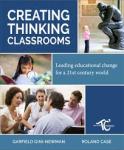
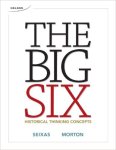
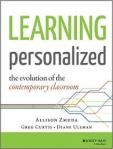
I am in the midst of unpacking each skill and trying to find strategies that will best support student learning in each of these areas. Once I compile some resources, I will post them on my site.
Here is to an exciting learning journey and a fantastic new year.
I would greatly appreciate any feedback that you would have time to provide on any post that I have made to date.
Best Wishes,
Ingrid


 Teaching & Learning Notebook
Leave a reply to Cory Cancel reply